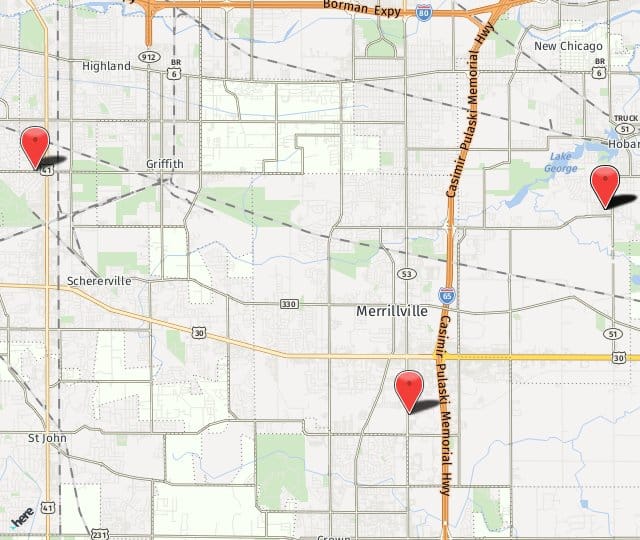
Convenient Locations In Highland, Hobart, & Merrillville
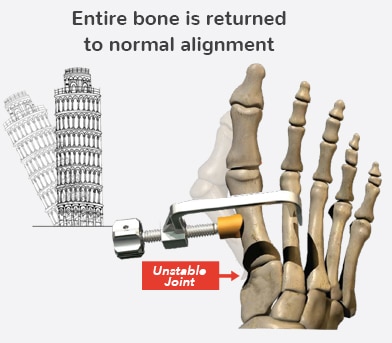
Are bunions limiting your activities and lifestyle? They can be a very painful issue to deal with. With each step, your entire body weight rests on that bunion. Ouch! A common misconception about a bunion is that it is an overgrowth of bone that can simply be shaved off. In reality, bunions are complex deformities caused by an unstable joint.

Relief is here at Bone & Joint Specialists. Now, there’s a new, patented treatment for bunion correction – Lapiplasty® 3D Bunion Correction. This option does more than remove “the bump.” It addresses your bunion in three dimensions to correct the root of the problem.
Our team includes board-certified orthopedic surgeon Dr. James Hong, a foot and ankle specialist. He knows how to use advanced imaging, smart surgical planning, and techniques like Lapiplasty® to treat the problem at its source.
How Does Lapiplasty® 3d Bunion Correction™ Work?
Instead of cutting the bone in half and shifting the top part over, the patented Lapiplasty® procedure uses specially designed instrumentation to rotate the entire deviated bone back into its normal anatomical position, naturally straightening your toe. It removes the “bump” and the associated pain.
Innovative titanium plating technology permanently secures the unstable foundation, the root of your bunion problem. Most patients are able to walk within days of surgery. No cast is required, allowing patients to get back to the footwear of their choice and activities quickly.
Why Was Lapiplasty® 3D Bunion Correction™ Developed?
Traditional bunion surgery has been limited to an incomplete, two-dimensional (2D) approach to correction. It cuts the bone in half and pushes the top part over to reduce the appearance of the bump.
For 87% of people with bunions, traditional surgery has failed to get to the true source of the problem – a 3D deformity caused by an unstable joint. In fact, one in three patients has been left dissatisfied with their surgical outcome in the past, and up to 70% of those treated have had their bunion return.
What Are the Symptoms of a Bunion?
Bunions are pretty obvious when they form. This is what to look for:
- A bulging bump on the outside of the base of your big toe
- Swelling, redness, or soreness around the big toe joint
- Corns or calluses where the first and second toes overlap
- Persistent or intermittent pain
- Restricted movement if arthritis is involved
What Are the Common Causes of Bunions?
Why some people develop bunions while others don’t is somewhat of a mystery. It is thought that these factors play a part:
- Inherited foot anatomy
- Foot injuries
- Deformities from birth (congenital)
Most people who develop bunions have a physical propensity to do so. They were born with the chance of getting a bunion because of deformity in the middle of the foot.
It would seem that wearing tight, narrow, high-heeled shoes would have a direct correlation, but research hasn’t shown a clear cause and effect. If these types of shoes don’t cause the condition that allows a bunion to form, they contribute to its development.
Bunions may also be associated with inflammatory types of arthritis, such as rheumatoid arthritis.
Can I Have Lapiplasty® Performed On Both Feet at the Same Time?
With the current state of our healthcare system, where patients hit deductible thresholds in their plans before their out-of-pocket amounts drop dramatically, many patients hit their deductible number and then seek to take care of another procedure within the same calendar year. This can be true with bunions and Lapiplasty® procedures; patients want to have both feet surgically repaired at the same time.
While this is possible thanks to the shorter recovery necessary with Lapiplasty®, we still don’t recommend this. After all, patients still need to be in a walking boot for the first six to eight weeks after their Lapiplasty® at Bone & Joint Specialists. While that is a far better option than crutches with traditional bunion surgery, it still isn’t normal walking. Having a walking boot on both feet isn’t very practical for most patients.
A better bet would be to wait at least that first six-to-eight-week period before having the second foot operated on. Even a few weeks longer than that would be preferable.
What Do I Need to Do to Prepare for Lapiplasty?
This is general surgery, so you’ll want to prepare just like you would for any procedure. Here’s a list of steps to help set yourself up for a smoother recovery:
- Avoid medications and supplements: Stop taking any blood thinners, aspirin, anti-inflammatories, and most herbal supplements a few days before surgery. These can increase your risk of bleeding.
- Stop smoking: If you smoke, plan to quit for at least two weeks before and after your procedure. Smoking narrows blood vessels and can slow down healing.
- Set up a recovery space: Create a comfortable area at home where you can rest. Have entertainment, pillows for elevation, and ice packs ready.
- Plan for help: You’ll be in a walking boot after the first day, which helps with mobility, but it’s not the same as walking normally. Arrange for help with chores, errands, or childcare if needed.
- Meal prep: Make things easier on yourself by cooking and freezing meals ahead of time.
- Work: If you work a desk job, you may be able to return in five to 14 days, depending on how you feel. If your job involves standing, walking, or physical labor, you’ll likely need four to six weeks before returning safely.
Why Choose Bone & Joint Specialists
When you're dealing with foot or ankle pain, you want care from someone who knows the region and knows your condition inside and out. At Bone & Joint Specialists, foot and ankle care is led by Dr. James Hong, a Merrillville native and board-certified expert in Foot and Reconstructive Rearfoot/Ankle Surgery. He has been voted “Best of the Region” in podiatry for ten consecutive years and brings decades of experience in both conservative and advanced surgical care.
Dr. Hong takes a practical, patient-first approach, always aiming to avoid surgery when possible. When it’s needed, he uses the latest minimally invasive and reconstructive techniques to help patients return to their daily routines with fewer complications and faster recoveries. He’s also actively involved in training the next generation of podiatrists through the Franciscan St. Margaret/Midwestern University Residency Program. Fluent in Spanish and Chinese, and known for his attentive bedside manner, Dr. Hong makes quality foot and ankle care more accessible and personal for patients across Merrillville, Highland, Hobart, and the surrounding area.
Frequently Asked Questions
Will I Be Able to Bend My Big Toe After Lapiplasty?
Yes, you will still have normal movement of your big toe after this surgery at Bone & Joint Specialists. The fusion in this procedure takes place at the metatarsophalangeal joint. This is deemed to be more of a “non-essential” joint. The majority of motion in the big toe is preserved and often enhanced by the corrections made with Lapiplasty®.
When Can I Exercise After Lapiplasty® Bunion Treatment?
Your doctor will go over expected results and estimated downtime. Recovery time depends on factors like your age, general health, activity level, and how severe the joint misalignment was before surgery.
In most cases, patients can begin some types of exercise about two weeks after the procedure, with a few limitations:
- Around two weeks after surgery: You may be cleared for upper body and core exercises. You will still be wearing a walking boot and must avoid putting pressure on the foot.
- While wearing the boot (up to six weeks): Stick to non-weight-bearing activity. Your doctor may recommend pool-based exercise or gentle movement using a rowing machine or a stationary bike.
- After six weeks: Once you’re back in regular shoes, you can gradually begin light, low-impact exercise.
- Around 12 weeks post-op: Your doctor may clear you for full-impact exercise at this point, depending on your recovery progress.
- Always follow your surgeon’s guidance: Every case is different, and your return to exercise should match your personal healing timeline.
Will I Be Able to Do All the Same Activities After I Recover?
Once you are fully recovered from your 3D bunion correction, you should have no difficulty gradually returning to your previous activity level without limitation. It's even possible for some women who've had Lapiplasty® to wear heels that were previously off-limits to them!
I've Had Bunion Surgery, and It Didn't Work. Can I Still Be a Candidate for Lapiplasty®?
Having bunion surgery is a big deal. It's frustrating to encounter persistent issues. If you're still struggling with pain and physical limitations caused by bunions, you may be a good candidate for the Lapiplasty® procedure.
Your doctor will perform a thorough examination, possibly with imaging, to ensure that you have not developed arthritis in the great toe joint, the one affected by the bunion. This is the primary reason why some patients aren't the best candidates for 3D bunion correction.
What Is the Right Age for Lapiplasty?
The Lapiplasty® procedure is approved for patients aged twelve and older. That said, it is necessary for the growth plates to have closed for the treatment to be successful. This may not occur until age 14. As long as the growth plates have closed, the primary factors that your doctor will consider are your overall health and whether or not arthritis has developed in the affected joint.
Could I Have an Allergic Reaction to the Metal Screws and Plates You Insert?
The Lapiplasty® procedure involves the placement of titanium plates and screws to fully restore the affected joint. Titanium medical implants have been the norm for many years. This material is the most biocompatible available at this time. It contains a very low amount of nickel, the metal that is most likely to cause allergic reactions. The quantity of nickel present in titanium is so low that allergic reactions are very rare.
Will I Need to Have Lapiplasty® Done Again in the Future?
Recurrence of the bunion has been one of the biggest problems with traditional bunion surgery, where about seventy percent of the altered bunions recur. The Lapiplasty® procedure was designed with the intention of preventing recurrence. This surgical method hasn’t been around that long, but data at this point shows a recurrence rate of only about three percent after thirteen months.
How Long Does the Lapiplasty® Procedure Itself Take in the Operating Room?
The Lapiplasty® procedure typically takes about 45 minutes to an hour per foot. That said, every case is a little different depending on the degree of bunion severity and any additional corrections your surgeon may need to make. While the actual surgical time is relatively short, you should still plan for a few hours at the surgery center to account for prep, anesthesia, and recovery before heading home the same day.
Is Physical Therapy Recommended or Required After Lapiplasty® Surgery?
It depends on your recovery and your doctor’s recommendation. Many patients do well without formal physical therapy, especially if they maintain good mobility and follow post-op instructions closely. However, if you have stiffness, weakness, or difficulty walking after you’ve transitioned out of the walking boot, your surgeon may suggest a short course of physical therapy to help restore strength and range of motion. It’s not always required, but it can be helpful for some people.
Are There Any Risks Involved With This Procedure?
As with any surgery, Lapiplasty® does come with some risks. These may include infection, delayed healing, hardware irritation, nerve sensitivity, or, in rare cases, continued pain or bunion recurrence. The risk of recurrence is much lower than with traditional bunion surgery, but it's still possible. Dr. Hong will walk you through the full picture before your procedure and explain how risks are managed and minimized based on your health history and recovery plan.
Schedule Your Consultation
Lapiplasty® bunion correction and other advanced orthopedic treatments are available at Bone & Joint Specialists in Merrillville, Highland, and Hobart, IN. If you’re struggling with foot or ankle pain, schedule your consultation by calling 219.795.3360.